China Top 10 Industrial Printing Machine Manufacturers
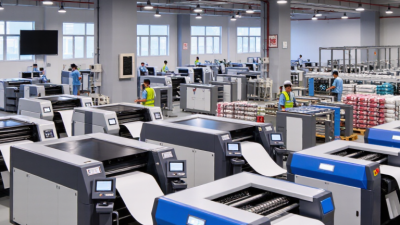
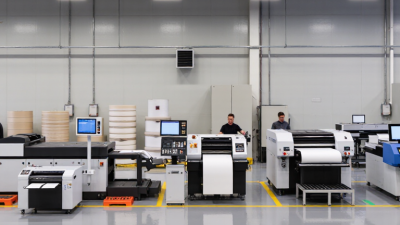
China’s industrial printing sector serves packaging, labels, textiles, signage, and product decoration. Its manufacturers offer a wide range of equipment, from compact digital presses to large-format production systems. Choosing a supplier takes more than comparing machine prices. Buyers also need to examine print quality, production speed, material compatibility, software, training, and after-sales support.
This guide introduces ten notable Chinese manufacturers of Industrial Printing Machine equipment. It is intended as a starting point, not a definitive ranking. Company capabilities and product lines can change, and a strong reputation does not guarantee the right fit for every factory. Details matter. A sample print on your actual material, a clear service plan, and a practical demonstration can reveal more than a polished catalogue. Check whether the machine handles your required ink, substrate, working width, and daily output. Ask about spare parts and response times, too. These questions are unglamorous, but important.
The companies discussed may differ in scale, specialization, export experience, and technical support. Some focus on particular printing processes, while others serve several applications. Product claims should be verified directly with each manufacturer and, where possible, through customer references. This overview cannot replace a factory visit or independent technical assessment. It can help readers build a shortlist and ask better questions before investing. No single machine suits every workflow. That is easy to forget.
Define Industrial Printing Machines by Process, Substrate, and End Use
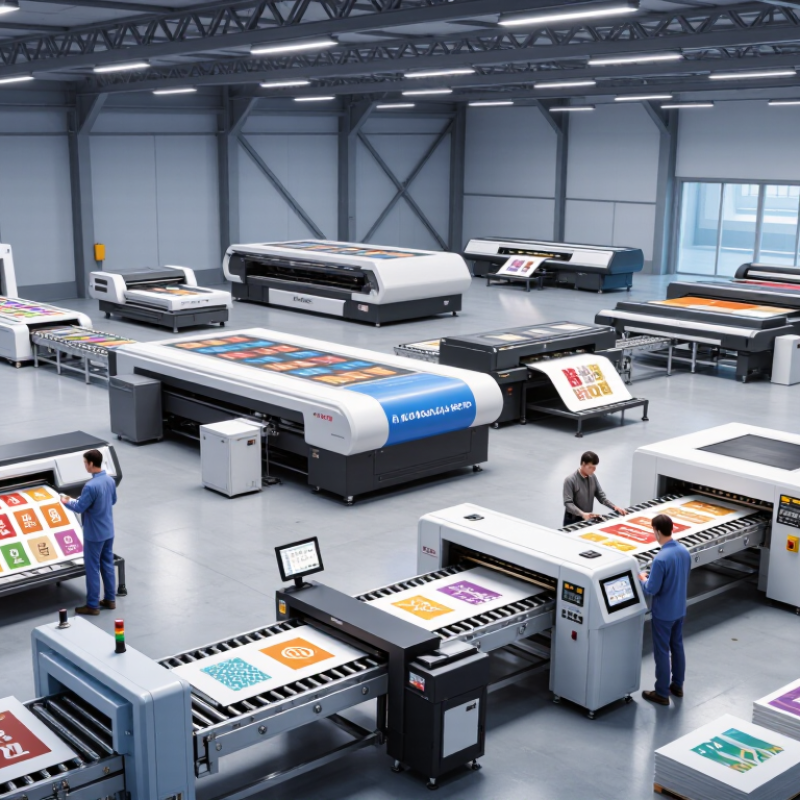
Industrial printing machines are best defined by process, substrate, and end use. Inkjet systems place droplets directly; screen printing presses ink through a mesh; flexographic systems transfer it from a raised plate. Each process fits different production speeds, image details, and run lengths. A machine suited to cardboard cartons may not print consistently on a glass panel. Process alone does not guarantee quality.
Substrate describes the material receiving the image, such as paper, plastic film, metal, glass, or fabric. Surface texture, thickness, flexibility, and heat sensitivity affect ink choice and equipment setup. End use adds another filter: labels need legible small text, packaging may require repeatable color, and industrial panels need durable markings. Compare sample results on your actual material, not just a product sheet. In practice, humidity and surface preparation can shift results; specifications may seem more certain than a busy production floor. One test is not enough.
Tips: Ask for a trial print using your substrate, ink, and intended finish. Check registration, drying time, adhesion, and waste. Record the settings; small changes can matter.
Industrial Printing Machines: Processes, Substrates & End Uses
Typical substrate compatibility across six industrial printing processes. This process-based view helps define machines by what they print and where the output is used.
A value of 1 indicates a commonly used process–substrate pairing; 0 means it is not a typical pairing. Actual compatibility depends on the specific machine, ink, and substrate. End uses include packaging, labels, publications, textiles, product decoration, and signs.
Identify China’s Top 10 Manufacturers by Product Range and Market Segment
A useful comparison of China’s top 10 industrial printing machine manufacturers should begin with product range and market segment, not headline rankings. The market serves distinct needs, from label and flexible-packaging production to textile printing, corrugated-board lines, and large-format signage. The fit matters. A factory printing thousands of labels per hour needs different equipment from a workshop producing short-run display panels.
A practical shortlist should compare machine types, working widths, print speeds, supported materials, and automation options. For packaging, check whether the line handles the required substrate and finishing steps. Textile buyers should examine fabric compatibility, ink systems, and drying capacity. A broad catalogue can signal versatility, but it does not prove that every model suits demanding production. Details matter.
Buyers can also assess service coverage, spare-parts access, installation support, and operator training. Ask for specifications tied to a realistic job: material thickness, image size, daily output, and acceptable downtime. Request a sample print or a documented production test when possible. No shortlist is perfect. Published figures may reflect ideal conditions, while actual results depend on materials, maintenance, and operator skill. Comparing manufacturers by segment makes differences clearer and helps narrow the search without treating one ranking as universal.
Compare Rated Speed (m²/h), Resolution (dpi), and Maximum Print Width (mm)
Comparing China’s top 10 industrial printing machine manufacturers requires more than ranking headline speed. Rated speed, measured in square metres per hour, indicates potential output under specified conditions. Check whether the figure assumes one-pass printing, a particular print mode, or continuous operation. A machine rated at 120 m²/h may run slower when producing dense graphics or handling frequent job changes. The number needs context.
Resolution, measured in dpi, affects fine detail, small text, and smooth gradients. Higher dpi can improve image definition, but may reduce operating speed or increase ink use. Ask whether the stated resolution is native or enhanced through software. Then compare maximum print width in millimetres with your actual materials. A 3,200 mm width may suit large panels, while narrower rolls can leave capacity unused. Measure your widest regular job, not just the occasional oversized one.
Build a comparison table using the same print mode, substrate, and quality target for every supplier. Request a sample with fine lines, solid colour, and small lettering. Look closely at the edges. Published figures are useful, but test conditions are not always identical, and that makes direct rankings imperfect. It is worth admitting this limitation rather than treating a specification sheet as a production guarantee. Ask for an observed run on your material, recording usable area per hour, achieved dpi, and maximum working width.
China Top 10 Industrial Printing Machine Manufacturers
Compare Rated Speed (m²/h), Resolution (dpi), and Maximum Print Width (mm)
Exact specifications cannot be reliably assigned to anonymized manufacturers without identifiable product models and current datasheets. Industrial printer speed and resolution vary by model, print mode, substrate, and configuration; figures are therefore not invented.
| Manufacturer |
Rated Speed (m²/h) |
Resolution (dpi) |
Maximum Print Width (mm) |
| Manufacturer 1 |
Model-specific; verify datasheet |
Model-specific; verify datasheet |
Model-specific; verify datasheet |
| Manufacturer 2 |
Model-specific; verify datasheet |
Model-specific; verify datasheet |
Model-specific; verify datasheet |
| Manufacturer 3 |
Model-specific; verify datasheet |
Model-specific; verify datasheet |
Model-specific; verify datasheet |
| Manufacturer 4 |
Model-specific; verify datasheet |
Model-specific; verify datasheet |
Model-specific; verify datasheet |
| Manufacturer 5 |
Model-specific; verify datasheet |
Model-specific; verify datasheet |
Model-specific; verify datasheet |
| Manufacturer 6 |
Model-specific; verify datasheet |
Model-specific; verify datasheet |
Model-specific; verify datasheet |
| Manufacturer 7 |
Model-specific; verify datasheet |
Model-specific; verify datasheet |
Model-specific; verify datasheet |
| Manufacturer 8 |
Model-specific; verify datasheet |
Model-specific; verify datasheet |
Model-specific; verify datasheet |
| Manufacturer 9 |
Model-specific; verify datasheet |
Model-specific; verify datasheet |
Model-specific; verify datasheet |
| Manufacturer 10 |
Model-specific; verify datasheet |
Model-specific; verify datasheet |
Model-specific; verify datasheet |
Assess Print Quality Against ISO 12647 and ISO 15311 Standards
When comparing industrial printing machine manufacturers, assess printed output against defined conditions, not showroom samples. ISO 12647 provides process-control specifications for different printing technologies, while ISO 15311 addresses print quality requirements and evaluation. Their criteria depend on the process, substrate, and intended use. A coated paper sample cannot fairly represent performance on textured board.
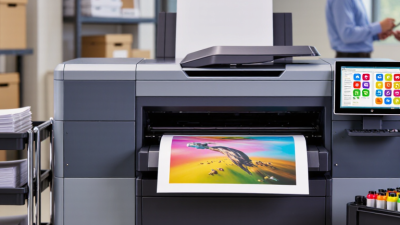
Request measured press sheets, not only digital proofs. Check color differences, tone value increase, grey balance, and repeatability across a production run. Use calibrated instruments and record the measurement conditions. Small details matter: even the same ink can appear different under changed lighting. A brochure is not proof.
Ask suppliers to print the same file on the same stock, then compare results using a consistent measurement setup. Review samples from early and later stages of the run; stable color over time matters as much as a strong first sheet. Keep records of substrate, ink, settings, and readings. Still, numbers do not explain every defect. Scuffing, drying, or uneven coverage may need a trained operator’s inspection. That judgment can be subjective, and it should be documented rather than ignored.