Leave Your Message

China Top Industrial Printing Machine Suppliers?

China has become a major production base for industrial printing equipment, serving packaging, textiles, electronics, labels, and decorative materials. However, identifying China’s top Industrial Printing Machine suppliers requires more than comparing catalogue prices. Buyers must examine print accuracy, machine uptime, ink compatibility, automation, energy use, and after-sales support.

Smithers’ The Future of Global Digital Printing to 2029 estimates that global digital print value could reach approximately US$230.5 billion by 2029. Its analysis highlights packaging, industrial decoration, and variable-data production as important growth areas. These trends are visible on factory floors. A reliable machine should maintain stable color, precise registration, and consistent output during long production runs.

Performance matters most.

Frank Romano, printing industry authority and professor emeritus at the Rochester Institute of Technology, stated, “The future of print is not print. It is communication.” His observation remains relevant for industrial buyers. Modern equipment must connect with wider workflows, not operate as an isolated press.

This guide will examine leading Chinese suppliers through practical criteria. These include technology experience, certifications, production capacity, export records, customization ability, maintenance response, and total ownership cost. Supplier claims can sound impressive. They still require verification.

Some manufacturers excel in high-speed packaging. Others focus on textile, UV, or corrugated applications. A supplier with excellent hardware may offer weak local service. That weakness can become expensive during a production delay.

The following overview therefore avoids declaring one universal winner. Instead, it compares suppliers against real industrial needs, available evidence, and the risks buyers should consider before signing a contract.
China Top Industrial Printing Machine Suppliers?

What Defines a Top Industrial Printing Machine Supplier in China

What Defines a Top Industrial Printing Machine Supplier in China

A top industrial printing machine supplier offers more than a fast press and an attractive quotation. Practical engineering experience matters. The supplier should explain suitable substrates, ink behavior, drying limits, and maintenance intervals. A factory visit can reveal much: organized wiring, labeled spare parts, clean test areas, and operators who understand production pressure. It is not glamorous. It is useful.

Smithers reported that the global digital print market reached about USD 136.7 billion in 2023 and may approach USD 230.5 billion by 2028. This growth increases demand for stable, scalable equipment. A reliable Chinese supplier should provide measurable proof, including repeatability tests, color-control records, uptime data, and sample output under real production conditions. Claims without test conditions are weak evidence. ISO 12647-based color management is also important when customers require consistent results across batches.

Service separates serious suppliers from trading companies. Response time, remote diagnostics, technician training, and local spare-part planning directly affect production losses. The supplier should state warranty limits clearly and document software updates. Energy consumption deserves attention too; electricity, curing systems, and compressed air can change operating costs significantly. I would still question any perfect performance claim. Machines sometimes behave differently after installation, especially with unfamiliar materials. A controlled pilot run, signed acceptance criteria, and honest discussion of failure risks create stronger trust than polished promises.
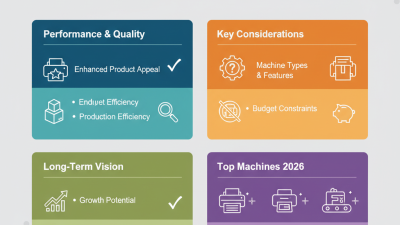
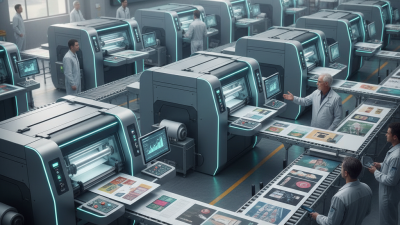
Main Types of Industrial Printing Machines and Their Applications

Industrial printing machines serve very different production needs. China’s leading suppliers typically manufacture equipment for packaging, textiles, electronics, labels, and building materials. The correct choice depends on substrate, speed, image durability, and required production volume.

Digital inkjet systems print variable graphics without plates. They suit corrugated boxes, flexible packaging, labels, and short-run industrial parts. MarketsandMarkets estimates the industrial printing market could reach about USD 35 billion by 2028, supported by automation and customized production.

Flexographic machines remain strong for films, paper bags, and cartons. They deliver high speed and stable color across long runs. However, plate preparation adds time and cost.

Screen printing handles thick ink layers on glass, metal panels, ceramics, and electronic components. It remains useful where strong opacity matters.

Textile printers apply pigment, reactive, or sublimation inks to garments and fabrics. They reduce sampling time, but ink selection still affects washing performance.

UV flatbed machines print directly onto rigid boards, acrylic, wood, and signs. Their instant curing helps shorten handling time.

A Smithers industry report forecasts continued growth in digital packaging print through 2028, driven by shorter runs and versioned designs. Yet reported growth does not guarantee factory savings. Energy use, maintenance skill, ventilation, and operator training can change the result.

A practical supplier evaluation should include test samples, measured uptime, ink costs, spare-parts response, and local technical support. Numbers on a brochure are not enough. Performance must be checked on the buyer’s actual materials.

Key Criteria for Evaluating Chinese Printing Machine Suppliers

Choosing a top industrial printing machine supplier in China requires more than comparing prices. Verify the supplier’s manufacturing experience, technical team, and export record. A polished brochure is not proof.

Request machine samples using your actual materials, ink, file formats, and production speed. Check registration accuracy, color consistency, drying performance, noise, and cleaning time. Ask for measured results, not general promises. Review electrical certifications, safety documentation, inspection reports, and quality-control procedures. Factory videos help, but an independent audit offers stronger evidence.

No checklist is perfect.

Study the total cost of ownership. Include spare parts, installation, operator training, software updates, energy use, and maintenance visits. A cheaper machine may create expensive downtime. Ask how quickly common components can ship and whether support operates in your time zone. Speak with recent customers, preferably those running similar workloads. Their feedback may reveal slow replies or difficult troubleshooting.

Request a written warranty with clear response times and coverage limits. Confirm acceptance testing before final payment. The contract should define output standards, delivery conditions, training, and remedies for missed specifications. Some buyers focus heavily on speed.

I think reliability deserves equal weight. A supplier that admits technical limits may be more trustworthy than one promising everything.

Small details matter. Test them early.

Leading Manufacturing Regions and Supplier Specializations in China

China’s industrial printing suppliers cluster around distinct manufacturing regions. Guangdong is strong in flatbed UV, screen printing, and electronics marking. Zhejiang focuses on textile, label, and flexible-material equipment. Jiangsu and Shanghai offer engineering depth for packaging, automation, and precision components. Shandong is notable for large-format and industrial inkjet systems. Regional expertise matters because nearby subcontractors can shorten tooling and service cycles.

Market data supports this specialization. MarketsandMarkets projects the global digital printing market to grow from about USD 27.9 billion in 2023 to USD 38.9 billion by 2028. Smithers also reports continued growth in digital packaging print through 2028. These trends encourage Chinese manufacturers to combine inkjet heads, curing units, software, and robotic feeding systems. Some suppliers now test machines with corrugated board, glass, metal sheets, or synthetic textiles before shipment.

Ask for evidence.

A credible supplier should provide printed samples, line-speed records, ink compatibility data, and maintenance logs. ISO 9001 certification can support process control, but it cannot prove real production performance. Factory visits remain useful, especially when checking calibration, spare-part storage, and operator training. However, published specifications may use ideal laboratory conditions. Buyers should request a trial using their own material, artwork, and drying requirements. That extra step often reveals limitations hidden by attractive brochures.

How to Select the Right Chinese Industrial Printing Machine Supplier

Selecting the Right Chinese Industrial Printing Machine Supplier

Choosing a Chinese industrial printing machine supplier requires more than comparing catalog prices. Define your materials, daily output, print width, resolution, ink type, and working environment. A machine for metal parts may not suit porous packaging or treated glass. Request test samples using your actual substrate and artwork. Inspect fine text, solid colors, adhesion, drying time, and repeatability.

During factory discussions, ask about printhead protection, calibration, spare parts, software updates, and operator training. A reliable supplier should explain maintenance intervals in practical terms. Check production records, quality-control procedures, export experience, and available certifications. Video tours help, but an independent factory visit provides stronger evidence. A polished demonstration is not proof.

I once saw a fast machine produce uneven color after several hours. The short trial had hidden that weakness. Ask for continuous testing under realistic conditions. Compare total ownership costs, including ink consumption, replacement parts, installation, energy use, and technical support. Confirm response times and warranty limits in writing. Also clarify delivery schedules and packaging protection. Some suppliers communicate well before payment, then respond slowly after installation. That risk deserves attention. A smaller supplier may offer careful support, but limited engineering capacity. A large factory may provide resources, yet treat custom requests less flexibly. Your evaluation should include both strengths and uncomfortable questions.

China Top Industrial Printing Machine Suppliers? - How to Select the Right Chinese Industrial Printing Machine Supplier

Supplier Profile Typical Machine Category Print Width Maximum Speed Compatible Materials Ink and Curing Registration Accuracy Estimated Lead Time Warranty and Service Evaluation Score
Profile A Industrial UV flatbed printer 1.6 × 3.2 m Up to 65 m²/h Rigid boards, acrylic, glass, metal, wood, PVC UV-curable ink; LED UV curing Up to ±0.2 mm under controlled conditions 35–60 working days 12 months; remote support and spare-parts package 9.1 / 10
Profile B High-speed UV roll-to-roll printer 3.2 m Up to 120 m²/h PVC film, banner, textile, wallpaper, coated paper UV-curable ink; air-cooled LED curing Up to ±0.5 mm under controlled conditions 45–75 working days 12 months; installation and online operator training 8.8 / 10
Profile C Industrial water-based textile printer 1.8–3.2 m Up to 90 m²/h Polyester fabric, cotton blends, coated textiles Water-based pigment or dye ink; heat drying Up to ±0.3 mm under controlled conditions 50–80 working days 12 months; technical documentation and process support 8.6 / 10
Profile D Industrial digital label printer 330–520 mm Up to 50 m/min Self-adhesive labels, coated paper, synthetic films Water-based or UV ink; integrated drying system Up to ±0.1 mm under controlled conditions 60–90 working days 12 months; commissioning and workflow integration support 8.7 / 10
Profile E Industrial solvent or eco-solvent printer 1.6–3.2 m Up to 80 m²/h Vinyl, banner, canvas, coated films, flexible signage Eco-solvent ink; heated platen and ventilation Up to ±0.3 mm under controlled conditions 30–55 working days 12 months; basic installation and online support 8.2 / 10
Profile F Industrial screen-printing line 600–1,200 mm Up to 3,000 sheets/h Paperboard, plastic sheets, metal panels, glass UV or solvent-based ink; UV or hot-air drying Up to ±0.15 mm with suitable tooling 75–120 working days 12 months; operator training and mechanical support 8.0 / 10
Selection guidance: Compare suppliers using total cost of ownership, verified sample quality, production speed, ink compatibility, after-sales response time, spare-parts availability, installation requirements, safety compliance, and documented acceptance-test results. Actual performance depends on substrate, ink, artwork, operating environment, and machine configuration.
The figures above are practical industry reference ranges for preliminary supplier screening and should be confirmed through technical specifications, factory testing, and a signed purchase agreement.