How to Choose the Right Cutting Machine?
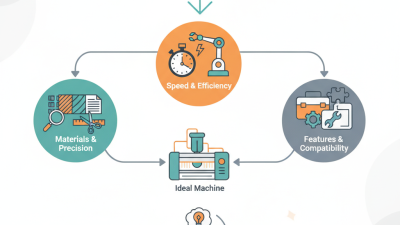
Choosing the right Cutting Machine begins with the material, not the machine’s advertised speed. A workshop cutting vinyl needs different capabilities than a packaging plant processing corrugated board. Fabric, leather, foam, acrylic, and composite sheets each demand specific blades, pressures, and motion control. The wrong match creates frayed edges, warped corners, wasted stock, and expensive downtime.
John Warnock, Adobe co-founder and a pioneer of digital production, said, “The computer is the most remarkable tool that we’ve ever come up with.” His insight applies to modern cutting systems. Software, sensors, and mechanical accuracy must work together. A precise blade cannot repair poor file preparation. Nor can impressive software compensate for a weak drive system. Check cutting width, material thickness, tool compatibility, nesting functions, safety controls, and service support. Ask for a live demonstration using your own material. Samples reveal more than brochures.
Budget matters, but the lowest purchase price may hide higher operating costs. Consider blades, maintenance, training, electricity, and production interruptions. Also examine the machine’s learning curve. A powerful system can still disappoint if operators avoid its advanced features. I have seen buyers focus too heavily on maximum speed. That choice can fail when edge quality matters more than hourly output. This is where careful comparison becomes essential. Record actual test results. Question optimistic claims. Leave room for changing materials and future orders. The best Cutting Machine is not universally the largest or fastest. It is the one that delivers repeatable results in your real workspace. Getting that decision perfect is unlikely. Making it measurable is realistic.
Define the Cutting Task and Material Requirements
Choosing a cutting machine starts with the cutting task, not the machine catalog. Define the required shape, tolerance, edge quality, production volume, and changeover frequency. A thin film, stainless sheet, foam board, and abrasive composite behave differently under pressure, heat, and vibration. Record material thickness, hardness, surface coating, and maximum sheet size.
The cut edge matters. A rough edge may increase secondary finishing time. A heat-affected edge may damage sensitive polymers. Measure actual samples before approving equipment. The International Organization for Standardization emphasizes documented process control through ISO 9001, while ISO 22400 links manufacturing performance with measurable production indicators. These principles support tracking cycle time, scrap rate, downtime, and first-pass yield. Small details matter. A five-minute setup repeated twenty times daily becomes a serious capacity loss.
Automation should match the task’s real complexity. The 2024 Deloitte and MAPI Smart Manufacturing and Operations Survey found that 86% of manufacturers view smart manufacturing as important for competitiveness. However, more sensors cannot fix an unclear cutting requirement. A practical trial should compare cut accuracy, tool wear, noise, dust, and operator adjustments. The U.S. Occupational Safety and Health Administration also stresses machine guarding and hazard assessment, which should be checked before installation. A clean sample cut can mislead. Test the full material batch, including warped sheets and variable thickness. The best choice may be less powerful, but easier to control.
Compare Cutting Machine Types and Their Operating Methods
How to Choose the Right Cutting Machine?
Compare Cutting Machine Types and Their Operating Methods
Choosing a cutting machine starts with the material, thickness, accuracy, and production volume. A guillotine shear uses a straight blade and suits fast sheet-metal cuts. A laser machine uses concentrated heat for detailed profiles and narrow kerfs. Plasma cuts conductive metals quickly, but it creates a wider heat-affected zone. A waterjet uses high-pressure abrasive water, making it useful for stone, glass, and heat-sensitive materials. CNC routers remove material with a rotating tool and work well with wood, plastics, and composites.
Operating cost can change the decision. The U.S. Department of Energy reports that compressed-air leaks may waste 20–30% of system capacity. This matters for plasma systems and pneumatic clamping equipment. The World Steel Association reported global crude steel production at about 1.9 billion tonnes in 2023, showing why throughput still matters in metal fabrication. Yet speed alone can mislead. A slower waterjet may reduce secondary finishing and material distortion.
Tips: Compare the complete process, not only the machine price. Check kerf width, noise, dust, consumables, ventilation, and operator training. Request a sample cut using your actual material. Measure edge quality afterward. A perfect choice rarely exists. I would also review maintenance records from similar workshops, because brochures often understate downtime. Include energy and waste costs in the calculation. That small detail can change the result.
Evaluate Key Specifications, Accuracy, Speed, and Capacity
How to Choose the Right Cutting Machine?
Choosing a cutting machine starts with measurable specifications, not impressive promises. Check the cutting method, maximum material thickness, working area, motor power, and control system. These details determine whether the machine suits daily production or occasional projects. Ask for tolerance data, not only maximum speed. A machine rated for 1,500 millimeters per second may lose accuracy at that speed.
Accuracy includes both precision and repeatability. Precision shows how closely a cut matches the intended measurement. Repeatability shows whether the machine can produce that result again. Measure twice. Review sample cuts using your actual material, such as layered fabric, acrylic sheet, or thin metal. Inspect corners, small holes, and long straight edges. Small errors become expensive during assembly. My first estimate once ignored material movement, which caused uneven edges. That mistake changed how I assess clamping and support systems.
Speed matters only when the machine maintains quality. Compare cutting speed, acceleration, setup time, and tool-changing time. A slower machine may produce more finished parts per hour. Capacity also includes bed size, maximum roll length, waste space, and duty cycle. Leave room. Overloading the work area can reduce airflow, stability, and operator access. Check maintenance intervals, calibration procedures, spare-part availability, and training requirements. Reliable technical documentation is useful, but hands-on testing reveals practical weaknesses. A quiet machine is not automatically efficient, and a large machine is not always the better investment.
How to Choose the Right Cutting Machine?
Compare representative specifications for common cutting-machine categories. Higher speed and working width support productivity, while a smaller accuracy value indicates tighter positioning control.
The values are representative benchmarks based on commonly published specifications for non-branded machine categories. Actual performance depends on material, tool condition, cutting method, software, and operating settings.