How to Choose a Top China Foil Press Machine?
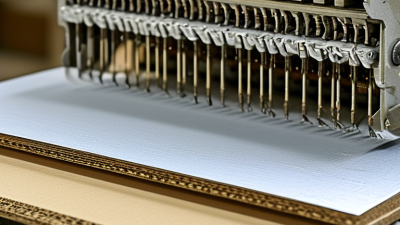
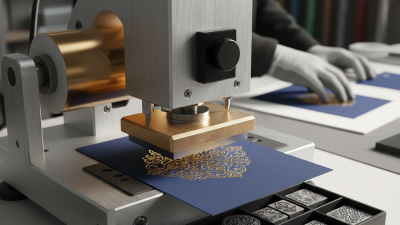
Choosing a top Foil Press Machine begins with the finished product, not the machine’s polished exterior. A luxury invitation may need sharp gold lettering, while a packaging line may require steady output for thousands of sheets. These are different demands. A press that performs beautifully on paper can struggle with laminated board, textured stock, or thin synthetic materials.
Markus Hoffmann, a recognized executive in the hot-stamping industry, has often emphasized a practical principle: “Consistent results come from the complete process, not from one machine feature.” This idea matters when comparing pressure control, heating stability, foil feeding, registration accuracy, and working speed. A reliable Foil Press Machine should hold its temperature across long runs. It should also maintain even pressure when the substrate changes slightly. Small differences become visible under bright light.
Look closely at real demonstrations. Ask to see fine serif letters, solid coverage, and narrow lines on your intended material. Check the waste rate after several hundred impressions, not only the first successful sample. Review installation requirements, operator training, spare parts, and response times from the supplier. These details often decide whether production feels smooth or frustrating.
There is no perfect press.
A cheaper model may seem sensible at first. However, unstable temperature or difficult foil adjustment can quietly increase labor costs. I would also question impressive speed claims without details about artwork, material, and setup time. The best choice balances measurable performance, practical experience, service support, and future production needs. Expect some compromise. The goal is dependable quality, not an impressive specification sheet.
Define China Foil Press Types by Flatbed, Rotary, and Pneumatic Technology
How to Choose a Top China Foil Press Machine?
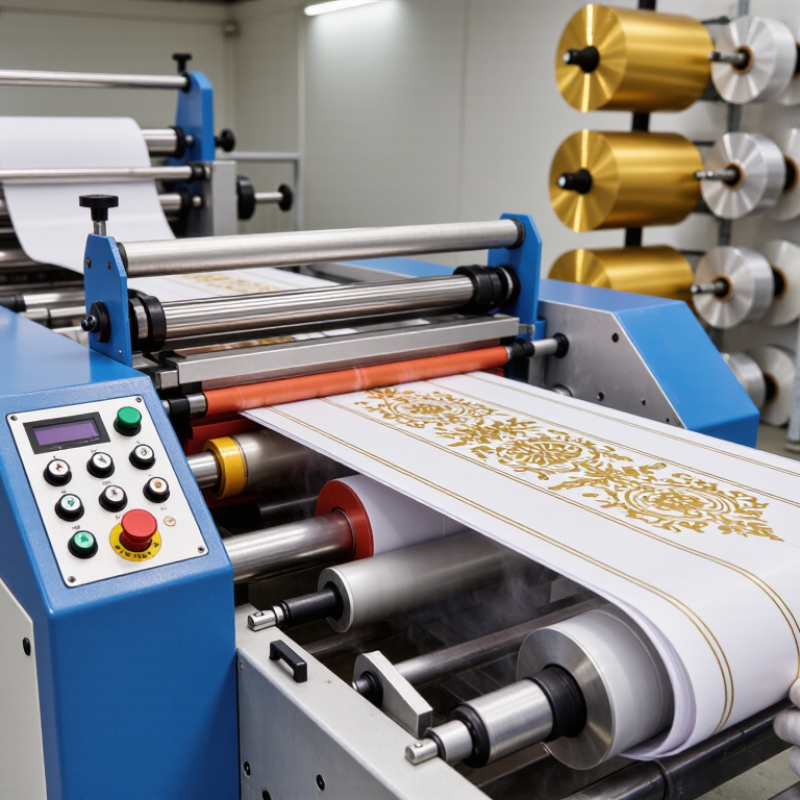
A reliable China foil press machine should match your production work, not just its advertised speed. Flatbed foil presses suit short runs, rigid sheets, and detailed positioning. They apply foil through a stationary platen, making setup changes relatively clear. Check platen parallelism, temperature stability, and pressure distribution across a 400 mm test sheet. Ask for repeatability data, not only a polished sample.
Rotary foil presses support continuous production and higher output. Their cylinders feed material smoothly, especially for labels, flexible packaging, and narrow web applications. However, tooling changes and registration control require skilled operators. Inspect web tension, foil tracking, cooling, and waste handling during a live trial. Speed is not everything. A fast machine with unstable registration can consume expensive foil quickly.
Pneumatic systems use compressed air to create consistent pressing force. They can deliver clean cycles and adjustable pressure, but air quality matters. Water in the line may damage valves and cause uneven impressions. Request pressure logs, safety interlocks, spare-parts information, and maintenance intervals. A perfect sample can mislead; it may hide slow setup or excessive scrap. Run your own substrate, foil, and artwork before buying. Leave room for doubt. Production conditions rarely match the showroom.
Set Targets for 90–180°C Heat, 0.3–0.8 MPa Pressure, and 20–60 Cycles/Min
How to Choose a Top China Foil Press Machine?
A reliable foil press machine should match your production targets, not only its advertised speed. Set a heat range of 90–180°C for different papers, films, and coated surfaces. Measure the platen temperature directly. The displayed value may differ by several degrees. Pressure between 0.3–0.8 MPa supports stable foil transfer without crushing delicate stock. Start low, then increase pressure gradually. A practical speed range is 20–60 cycles per minute. Faster cycling can reduce transfer time and create weak or uneven impressions.
Tips: Test three temperature settings before ordering. Check pressure stability during repeated cycles. Ask for sample results using your actual material. Watch the first and last sheets in a batch. Small changes matter.
In my experience, heat alone cannot fix poor results. Foil type, die detail, dwell time, and paper moisture also influence adhesion. A fine logo may need slower cycling near 20 cycles per minute. Broad solid areas can often run closer to 60 cycles per minute. However, every substrate behaves differently. I once judged a machine from one excellent sample, which was a mistake. Request continuous testing, not a single impression. Record temperature, pressure, cycle speed, and waste rates during the trial. A strong supplier should explain these readings clearly and provide repeatable data.
How to Choose a Top China Foil Press Machine? - Set Targets for 90–180°C Heat, 0.3–0.8 MPa Pressure, and 20–60 Cycles/Min
| Application / Material |
Recommended Temperature |
Recommended Pressure |
Target Cycle Rate |
Useful Machine Features |
Selection Consideration |
| Paper, cards, and coated stock |
90–120°C |
0.30–0.45 MPa |
40–60 cycles/min |
Fast heat recovery, adjustable dwell time, accurate temperature control |
Use lower pressure and temperature settings to reduce paper marking, curl, or distortion. |
| Synthetic labels and films |
105–135°C |
0.35–0.55 MPa |
35–55 cycles/min |
Fine pressure adjustment, stable platen alignment, programmable dwell and release |
Check the material supplier’s heat limit before increasing temperature or dwell time. |
| Textiles and fabric panels |
120–150°C |
0.40–0.65 MPa |
25–45 cycles/min |
Even platen heating, repeatable pressure, anti-slip work surface, safety guarding |
A larger working area and consistent pressure distribution help prevent uneven foil transfer. |
| Leather and coated synthetic leather |
120–160°C |
0.45–0.70 MPa |
20–40 cycles/min |
Rigid frame, robust pressure mechanism, precise dwell timer, replaceable tooling |
Test pressure and dwell time on offcuts because surface finishes vary significantly. |
| Rigid plastics and specialty laminates |
140–180°C |
0.55–0.80 MPa |
20–35 cycles/min |
High-temperature platen, thermal insulation, pressure monitoring, over-temperature protection |
Confirm that the foil, substrate, and adhesive layer are rated for the selected temperature. |
| Mixed production requirements |
90–180°C |
0.30–0.80 MPa |
20–60 cycles/min |
Digital recipe storage, quick parameter changes, interchangeable dies, cycle counter |
Choose a machine with independent adjustment of temperature, pressure, dwell time, and cycle speed. |
Evaluation checklist: Verify temperature uniformity across the platen, pressure repeatability, cycle-speed stability, emergency-stop performance, guarding, tooling compatibility, power requirements, and availability of replacement heating elements and seals.
The operating values above are practical starting ranges for machine selection. Final settings should be validated with the actual foil, substrate, adhesive system, artwork size, and required finish.
Compare Foil Width, Working Area, Registration Accuracy, and 1–3 kW Power
How to Choose a Top China Foil Press Machine?
Choosing a foil press machine starts with the job, not the catalog. Measure your usual foil width and leave room for edge alignment. A 350 mm roll may suit labels, while wider packaging needs a larger foil path. The working area should fit the largest sheet comfortably. Too little space causes awkward positioning and wasted material. A larger bed is not always better. It can increase heating time and floor space.
Tips: Request test samples using your actual substrate, foil, and artwork. Check foil coverage near corners. Ask for registration accuracy results, not only advertised figures. Small errors become obvious on fine text and repeated patterns. Also inspect pressure consistency across the working area.
For many small and medium applications, 1–3 kW power can provide practical heating performance. Higher power may shorten warm-up time, but it can raise energy use and require stronger electrical support. Temperature stability matters more than a dramatic power rating. In production checks, compare warm-up time, recovery after each press, and surface uniformity. I would not choose from power alone. A machine with stable registration and simple adjustments may outperform a faster model. One detail is easy to miss: confirm whether the stated working area includes usable margins. Ask for maintenance access, operator training, and written accuracy conditions before purchase.
How to Choose a Top China Foil Press Machine?
Comparison of typical non-brand machine configurations by foil width, working area, registration accuracy, and installed power.
| Configuration |
Foil Width |
Working Area |
Registration Accuracy |
Installed Power |
| Compact |
300 mm |
320 × 450 mm |
±0.15 mm |
1.0 kW |
| Production |
400 mm |
450 × 650 mm |
±0.10 mm |
1.8 kW |
| High-Output |
500 mm |
600 × 800 mm |
±0.08 mm |
3.0 kW |
The chart uses an indexed comparison, with the compact configuration set to 100. A higher index represents greater foil capacity, larger working area, better registration precision, or higher available power. For registration accuracy, the smallest tolerance receives the highest score.
Verify ISO 9001, CE Compliance, Safety Systems, and ±0.1 mm Registration
Choosing a top China foil press machine requires more than comparing price and production speed.
Start by verifying ISO 9001 certification and its issuing body. Check the certificate number, validity period, and covered factory address. A copied certificate proves nothing. Ask for recent quality records and inspection procedures.
CE compliance should include a valid Declaration of Conformity and supporting technical documents. Review the electrical design, emergency stop circuit, guarding, and thermal protection. Test whether the machine stops quickly when a safety door opens.
Confirm that operators can reach controls without entering a hazardous area. In real workshops, small safety details matter. A loose cable or unclear alarm can create serious downtime.
Registration accuracy of ±0.1 mm also needs evidence. Request sample reports using your actual foil, substrate, and artwork. One impressive sample is not enough.
Tips:
Ask for a factory video showing alignment tests, temperature stability, and emergency-stop checks. Measure several finished sheets, not just one. Confirm maintenance access, spare-part support, and operator training in writing. Do not rely only on sales promises. A machine may meet ±0.1 mm in ideal conditions but drift after long heating cycles. This is where careful testing becomes valuable. I would also record ambient temperature and material thickness during trials. That step is easy to miss, yet it can explain inconsistent results later.
Evaluate Total Cost Through Output, Energy Use, Warranty, and Spare Parts Support
How to Choose a Top China Foil Press Machine?
A low purchase price can hide a high operating cost. When evaluating a foil press machine, request a live production trial with your actual foil, substrate, and artwork. Record finished sheets per hour, setup time, rejection rates, and daily output. A machine producing 2,000 acceptable sheets may cost less than one producing 3,000 sheets with heavy waste.
Energy use also deserves careful measurement. Check the rated power, warm-up time, and average consumption during continuous production. A power meter can reveal differences that brochures often overlook. Ask whether standby heating can be reduced during short pauses. Small savings matter when the press operates six days weekly. My own assessment is simple: calculate energy cost per finished sheet, not per hour.
Warranty terms must be specific. Confirm coverage for heating elements, pressure systems, controllers, and labor. Ask who pays shipping and how technical faults are diagnosed. Spare parts support is equally important. Request prices and delivery times for sensors, heating plates, belts, and control boards. Keep common parts available if production is urgent. Still, I would not trust a promised “fast response” without written service conditions. Some evaluations also miss operator training, which can create avoidable waste. That mistake is easy to make.