Top 10 Machine Printing Innovations to Watch in 2025
In the rapidly evolving landscape of technology, the machine printing industry stands at the forefront of innovation, continuously setting new standards for efficiency and creativity. As we approach 2025, industry experts are predicting groundbreaking advancements that will shape the future of this crucial sector. According to Dr. Emily Carter, a leading expert in machine printing technologies, “The next wave of innovations in machine printing will not only enhance productivity but also transform how we think about design and customization.”

This article explores the top 10 machine printing innovations that industry stakeholders and enthusiasts should keep an eye on over the next few years. From AI-driven processes to sustainable materials, these innovations promise to redefine what is possible in the world of printing. As we delve into each development, it becomes clear that machine printing is more than just a method of production; it is a dynamic field poised for significant transformation, pushing the boundaries of art, functionality, and sustainability.
As we look forward to 2025, it is essential to understand how these innovations will impact various sectors, including packaging, textiles, and commercial printing. By harnessing cutting-edge technologies, machine printing is set to not only meet current demands but also anticipate future challenges, making it a foundational element in the ongoing conversation about technological advancement in manufacturing.
Emerging 3D Printing Techniques Set to Transform Manufacturing
In recent years, 3D printing has emerged as a groundbreaking technology poised to revolutionize the manufacturing landscape. According to a report by Wohlers Associates, the global 3D printing market is projected to reach $34.8 billion by 2024, demonstrating an impressive annual growth rate of 25.76%. This exponential growth is fueled by advancements in materials, software, and process efficiencies, paving the way for innovative printing techniques that can dramatically enhance production capabilities.
One of the most promising developments is the rise of bioprinting, which combines 3D printing with biological materials to create tissue and organ-like structures. Recent studies suggest that 3D-printed tissues could significantly reduce the dependency on organ transplants, addressing a critical shortage in the medical field. Additionally, technologies like continuous liquid interface production (CLIP) are set to accelerate the production speed, enabling manufacturers to produce complex parts in a fraction of the time compared to traditional methods. As these emerging techniques gain traction, they hold the potential to redefine manufacturing processes and supply chains, driving efficiency and cost-effectiveness across various industries.
Sustainable Materials Revolutionizing Machine Printing in 2025
The machine printing industry is on the brink of transformation as sustainable materials take center stage in 2025. With increasing environmental consciousness, manufacturers are prioritizing eco-friendly inks and substrates. Innovations such as bio-based inks made from renewable resources, biodegradable printing materials, and recycled substrates are paving the way for a cleaner production process. These advancements not only reduce environmental impact but also cater to a growing market demand for sustainable products.
Additionally, the integration of cutting-edge technologies, such as digital printing and 3D printing, enhances the potential for sustainability in machine printing. By minimizing waste and allowing for on-demand production, these technologies enable manufacturers to adopt sustainable practices more efficiently. Furthermore, advancements in printer design promote energy efficiency, significantly lowering carbon footprints. As the industry leads the charge toward sustainability, these innovations promise to redefine machine printing while fulfilling the dual role of meeting consumer needs and protecting the environment.
AI-Driven Print Optimization for Enhanced Productivity
The printing industry is poised for significant transformation by 2025, particularly through the implementation of AI-driven print optimization technologies. According to recent market research, the global market for AI in printing is expected to grow at a compound annual growth rate (CAGR) of over 22% from 2023 to 2028. This rapid growth is indicative of the positive impact that AI can have on productivity and workflow efficiency within the sector. By utilizing advanced algorithms and machine learning techniques, printers are now able to automate routine tasks, reduce waste, and enhance the precision of print jobs, ultimately leading to faster turnaround times and improved quality.
Moreover, AI is facilitating the emergence of innovative startups within the printing landscape, with a notable increase in AI-centric solutions being developed. For instance, a report highlights that there are currently over 9,200 startups targeting the printing space, many focusing on integrating AI into their offerings. These companies are not only optimizing printing processes but also ensuring sustainability in production. As highlighted by industry experts, AI's ability to analyze vast amounts of data allows for predictive maintenance of printing equipment and better inventory management, which are crucial for minimizing downtime and maximizing resource utilization. This synergy between AI and printing technology signals a new era of operational excellence in the industry.
Integration of IoT in Printing Devices for Smart Production
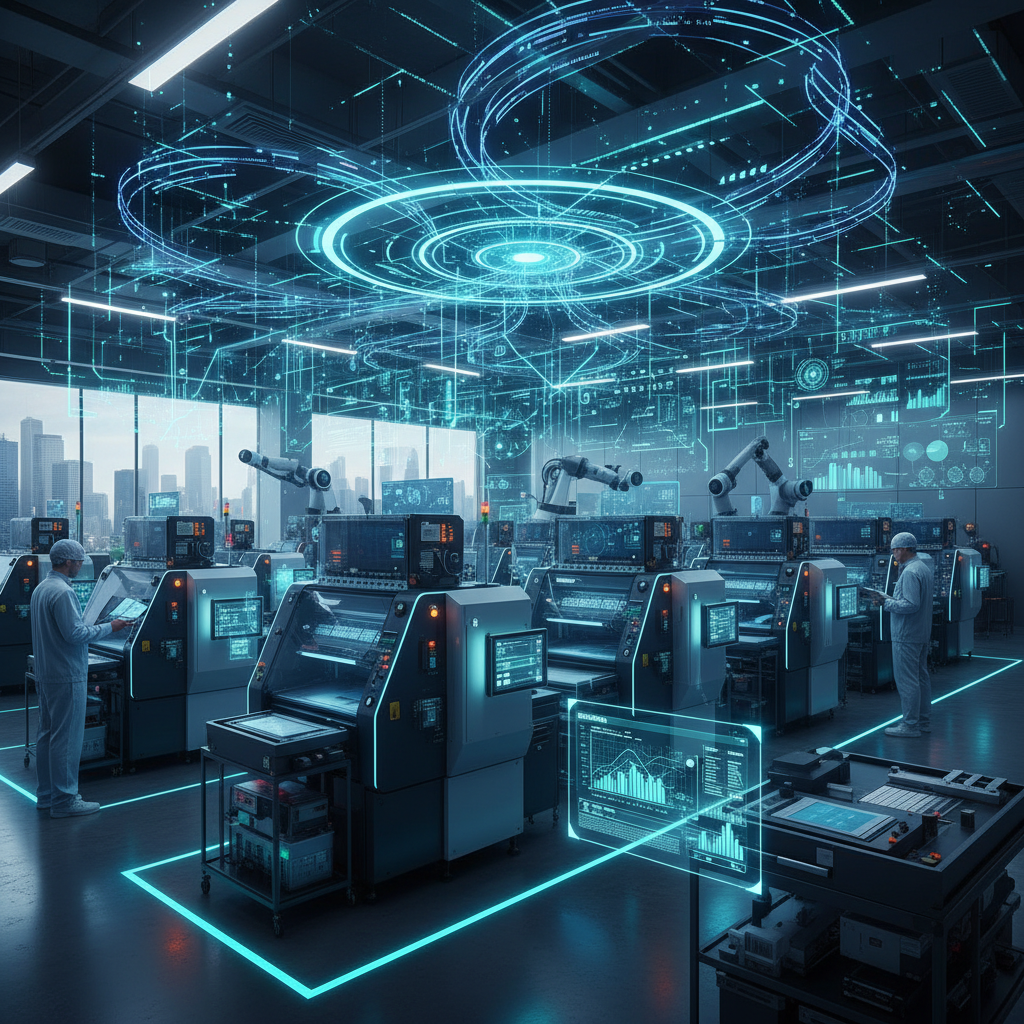
The integration of the Internet of Things (IoT) in printing devices is set to revolutionize the printing industry by 2025, driving smart production capabilities that enhance efficiency and reduce waste. With IoT sensors embedded in printers, real-time monitoring of equipment and production processes becomes possible, allowing for predictive maintenance that minimizes downtime and costly repairs. This proactive approach not only extends the lifecycle of printing devices but also optimizes performance, ensuring that production flows smoothly without interruptions.
Moreover, IoT integration will enable a more personalized and customer-centric printing experience. Devices can automatically adjust settings based on the specific requirements of different jobs, ensuring the highest quality output while conserving resources. Additionally, data collected from various printing processes can be analyzed to identify trends and areas for improvement, leading to innovative solutions that address unique client needs.
As companies increasingly adopt smart printing solutions, they will not only enhance their operational capabilities but also contribute to a more sustainable approach to production, aligning with the growing demand for eco-friendly practices in the industry.
Advancements in Digital Textile Printing Technologies
The digital textile printing industry is rapidly evolving, with significant advancements expected in 2025. The market for digital textile printing inks alone is poised for remarkable growth, projected to increase from approximately $1.9 billion in 2024 to nearly $6.4 billion by 2032, reflecting a robust compound annual growth rate (CAGR) of 16.37%. This surge highlights the shift towards innovative, sustainable printing technologies as brands and manufacturers seek to enhance their production capabilities and meet the rising demand for customization in textile applications.
Moreover, the broader digital printing ink market is experiencing a similar upward trajectory, anticipated to rise from $3.43 billion in 2023 to $5.54 billion by 2030, marking a CAGR of 7.1%. As the textile market itself is projected to grow to $1.419 trillion by 2032, the pivotal role of digital printing in revolutionizing fabrics cannot be overstated. Driven by increasing consumer preferences for personalized products and environmentally friendly printing methods, this sector is set to become a cornerstone of the textile industry's future, showcasing the dynamic interplay between technological innovation and market demand.
Top 10 Machine Printing Innovations to Watch in 2025 - Advancements in Digital Textile Printing Technologies
| Rank |
Innovation |
Description |
Expected Impact |
| 1 |
Inline Color Management |
Real-time color adjustment during printing processes. |
Improved color accuracy and consistency. |
| 2 |
Eco-Friendly Inks |
Biodegradable and non-toxic printing inks. |
Reduction in environmental impact. |
| 3 |
3D Textile Printing |
Integration of three-dimensional printing techniques in textiles. |
Creation of complex textile designs and structures. |
| 4 |
High-Speed Digital Printing |
Advanced printers capable of faster production rates. |
Increased efficiency and reduced lead times. |
| 5 |
AI-Powered Design Tools |
Artificial intelligence integration for design creation. |
Enhanced creativity and design processes. |
| 6 |
Customized Textile Solutions |
Personalization options for consumers in textile printing. |
Higher customer satisfaction and engagement. |
| 7 |
Predictive Maintenance Technology |
Sensors and software that predict equipment failures. |
Reduced downtime and maintenance costs. |
| 8 |
Hybrid Printing Technologies |
Combination of traditional and digital printing methods. |
Flexibility in production capabilities. |
| 9 |
Blockchain for Supply Chain Transparency |
Utilization of blockchain for tracking materials. |
Increased trust and accountability in sourcing. |
| 10 |
Seamless Workflow Integration |
Automation of the entire printing workflow. |
Improved productivity and operational efficiency. |