How to Choose the Best Automatic Stamping Machine for Your Business?
Choosing the right Automatic Stamping Machine can significantly impact your business's efficiency and output quality. Industry expert John Smith, a renowned automation engineer, states, "The right stamping machine can transform productivity." This insight highlights the importance of making an informed decision.
When selecting an Automatic Stamping Machine, consider your specific production needs. Factors such as size, stamping speed, and material compatibility are crucial. A machine that fits your requirements can enhance workflow and reduce downtime. Many businesses overlook these details, leading to suboptimal performance.
Moreover, flexibility is essential. Your business may evolve, requiring adjustments to your stamping processes. Opting for a versatile Automatic Stamping Machine can accommodate such changes over time. Evaluate each option carefully to avoid common pitfalls. Investing in a quality machine now can save costs and improve efficiency later. Always keep future growth in mind while making your choice.
Understanding Your Business Needs for an Automatic Stamping Machine
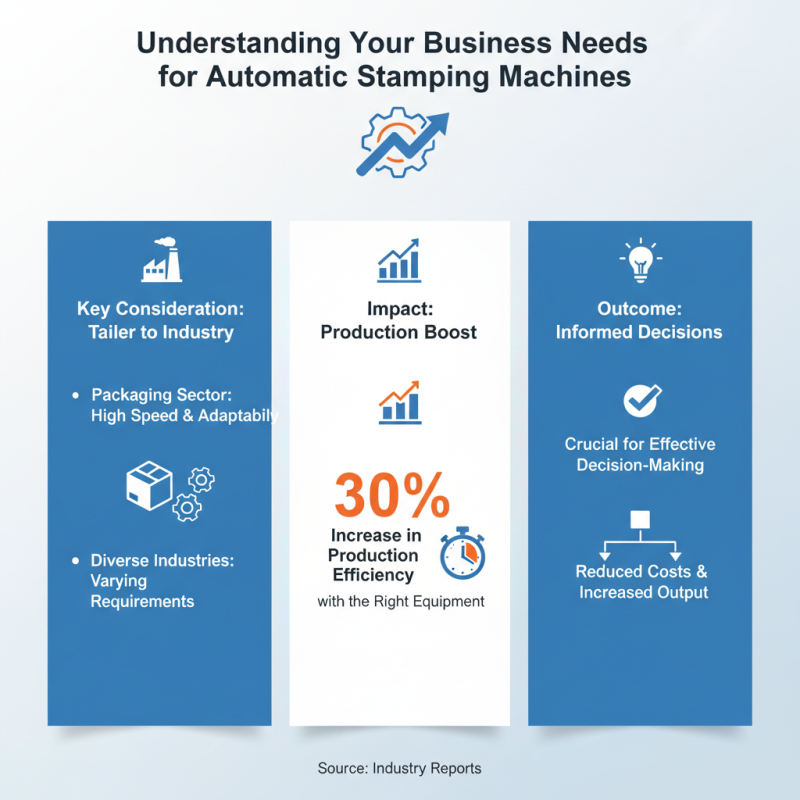
Understanding your business needs for an automatic stamping machine is crucial for effective decision-making. Different industries have varying requirements. For instance, the packaging sector demands machines that can handle high speeds and adaptability. Reports indicate that businesses experience up to a 30% increase in production efficiency with the right stamping equipment.
Analyze your workflow to determine specific needs. Are you focusing on volume, quality, or both? Consider factors such as material thickness and stamping size. A machine suitable for paper may not work well on metal. Industry data shows that 20% of companies face production delays due to incompatible machinery. This underlines the importance of aligning equipment with operational demands.
Engage with your team to gather insights about daily challenges. They encounter issues firsthand and can pinpoint what features may be beneficial. Automated machines can offer precision and reduce labor costs, but the initial investment can be steep. Some businesses find that, despite automation, manual oversight remains necessary to ensure quality control. Balancing automation with human expertise can yield the best outcomes.
Key Features to Consider in Automatic Stamping Machines
When selecting an automatic stamping machine, focus on its key features. One crucial aspect is speed. High-speed machines can boost productivity significantly. Consider the materials you will be stamping. Different machines handle various materials differently. Ensure the model supports your business needs.
Another important feature is ease of use. A user-friendly interface can reduce training time. Look for machines with programmable settings. This flexibility allows quick adjustments for different tasks. Reliability is essential too. Inspect reviews and feedback from other users. A machine with a solid track record minimizes downtime.
Support and maintenance are often overlooked. A dependable support system assures you can resolve any issues. Check if spare parts are readily available. This can save you time and frustration. Assess the size and weight of the machine as well. A compact design might be necessary for limited spaces. Consider these details to make an informed decision.
Automatic Stamping Machines - Key Features Comparison
Evaluating Different Types of Automatic Stamping Machines
When evaluating different types of automatic stamping machines, it’s crucial to consider their functionality. These machines vary widely in speed, pressure, and stamping capabilities. High-speed models can produce thousands of impressions per hour. However, they may lack precision for intricate designs. Low-speed machines often ensure greater detail, making them suitable for high-quality finishes.
It's also important to assess the materials these machines can handle. Some are designed for soft materials like paper, while others can work with metals and plastics. Understanding your business’s specific needs will guide you in choosing the right machine. Look for machines that offer versatility but remember that more features can complicate usage.
Don’t overlook the maintenance aspect. Automatic stamping machines require regular upkeep for optimal performance. Some models have complex mechanisms that can lead to increased downtime if not properly maintained. Speak with trusted professionals or users to gather insights. Their experiences can highlight potential pitfalls and help you make a more informed decision.
How to Choose the Best Automatic Stamping Machine for Your Business? - Evaluating Different Types of Automatic Stamping Machines
| Machine Type |
Max Stamping Speed (units/min) |
Material Compatibility |
Price Range ($) |
Best Use Case |
| Flat Bed Stamping Machine |
30 |
Paper, Cardboard |
1,000 - 5,000 |
High-volume printing |
| Roll-to-Roll Stamping Machine |
50 |
Plastic, Vinyl |
2,000 - 10,000 |
Label printing |
| Heat Transfer Stamping Machine |
20 |
Textiles, Fabrics |
3,000 - 15,000 |
Apparel customization |
| Automatic Pad Printing Machine |
40 |
Ceramics, Metal |
5,000 - 20,000 |
Promotional products |
| Digital Printing Stamping Machine |
60 |
Paper, Plastics |
10,000 - 30,000 |
Short runs, Custom designs |
Assessing Manufacturer Reputation and Support Services
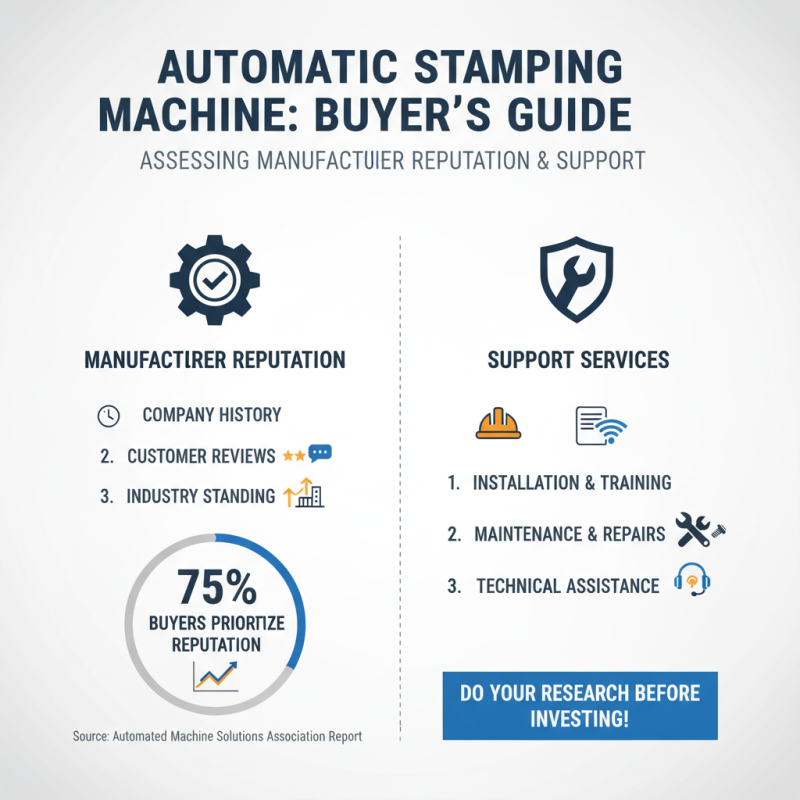
When choosing an automatic stamping machine, the reputation of the manufacturer plays a crucial role. A company's history, customer reviews, and industry standing can provide insights into the reliability of their products. According to a report by the Automated Machine Solutions Association, 75% of buyers prioritize manufacturer reputation in their purchasing decisions. This statistic highlights the importance of doing your homework before investing.
Evaluating support services is equally critical. A well-regarded manufacturer should offer robust customer support, comprehensive training, and reliable maintenance options. The same report states that 60% of users faced operational challenges due to inadequate support. A machine may be high quality, but without proper backing, its effectiveness diminishes. Look for manufacturers that provide clear channels for communication, quick response times, and readily available resources.
Finally, consider the feedback from existing users. Online forums and industry reviews can reveal patterns about typical issues and the responsiveness of manufacturers. While tools may differ, shared experiences can guide you toward more reliable options. Reflecting on these factors helps in selecting a stamping machine that not only meets your production needs but also offers peace of mind in service reliability.
Understanding Budget and Cost-Effectiveness of Your Choice
When choosing an automatic stamping machine, understanding your budget is crucial. The initial cost is often just the tip of the iceberg. Maintenance, supplies, and operational costs can add up quickly. A machine may seem affordable, but hidden costs can impact your bottom line. It’s essential to analyze the total cost of ownership.
Consider how often you will use the machine. If your business needs high-volume stamping, investing in a more efficient model might save money over time. Look for machines that offer flexibility, as versatile models can reduce the need for additional equipment. This adaptability can enhance cost-effectiveness.
Reflect on your production goals. Sometimes, cheaper options can lead to inefficiencies that ultimately cause delays and lost revenue. Evaluate your current processes. Are there bottlenecks that an automatic machine can alleviate? If not, the investment might not be justified. Properly weighing these factors is key to making a sound financial decision.