2026 Best Hot Foil Machine for Your Business Needs?
In today's competitive market, finding the right Hot Foil Machine can greatly impact your business success. Many options exist, but not all machines meet the unique demands of various industries. For instance, a high-quality machine can elevate your branding by adding a luxurious touch to packaging.
You might wonder, what features should I prioritize? Speed, accuracy, and versatility are crucial factors. However, many users overlook the importance of user-friendly designs. Difficult setups can lead to frustration and wasted time.
Additionally, consider the after-sales support that comes with your machine. A great warranty and responsive customer service can make all the difference. As you explore, stay aware of your specific needs and budget constraints. Choosing the right Hot Foil Machine isn’t always easy, but with careful consideration, you can make a choice that drives your business forward.
Understanding Hot Foil Printing Technology and Its Applications
Hot foil printing is a captivating technology that elevates branding and packaging. It involves adding metallic foil on various substrates, creating eye-catching graphics. According to Smithers Pira, the global hot foil stamping market is projected to reach $4 billion by 2026. This growth highlights the increasing demand for premium finishes in printing applications.
Businesses leverage hot foil printing for its versatility. It can enhance labels, packaging, and promotional items. The temperature-sensitive process requires skillful handling and precise machinery. Achieving the desired print density can be challenging. A poorly calibrated machine may lead to uneven finishes. As a result, ensuring quality control is vital in the production process.
Investing in a hot foil machine can seem daunting. This technology requires a balance between cost and efficiency. Businesses must assess their specific needs before making a purchase. Failure to do so can result in underutilized resources. Choosing the right machine affects long-term success and creativity. A thoughtful approach ensures optimal use and maximizes returns.
Key Features to Consider When Choosing a Hot Foil Machine
When selecting a hot foil machine, specific features significantly impact your decision. The correct heating mechanism matters. It can influence the quality of the foil transfer. Reports indicate that around 70% of businesses prioritize consistent heating for better results. Machines with adjustable temperature settings provide flexibility. This adaptability helps accommodate various foil types.
Another critical feature is the machine's speed. A quicker foil application can enhance productivity. Studies show that businesses can improve output by nearly 30% with faster machines. However, speed should not compromise quality. It's essential to find a balance. Many users report issues with overheating when machines operate at high speeds.
Also, consider the size and weight of the machine. A portable model can save space and is easier to move. Research highlights that 60% of businesses with limited workspace prefer compact designs. However, smaller machines might sacrifice functionality. Assessing your unique needs is vital. Each feature plays a significant role in achieving the desired outcome. Prioritizing them will guide you toward making a better choice.
2026 Best Hot Foil Machine for Your Business Needs
| Model |
Max Print Width |
Temperature Range |
Speed (impressions/min) |
Weight (kg) |
Price ($) |
| Model A |
300 mm |
100 - 200 °C |
120 |
50 |
1500 |
| Model B |
400 mm |
80 - 220 °C |
100 |
70 |
2000 |
| Model C |
250 mm |
90 - 210 °C |
150 |
45 |
1200 |
| Model D |
350 mm |
100 - 250 °C |
130 |
60 |
1700 |
Top Hot Foil Machines for Small and Medium-Sized Businesses
When selecting hot foil machines for small and medium-sized businesses, various factors come into play. According to recent industry reports, over 70% of businesses state that having reliable, efficient equipment is crucial for minimizing production downtime. A quality hot foil machine can significantly enhance branding efforts by providing unique finishes on packaging and promotional materials.
Small businesses are often looking for machines that balance cost and performance. Data shows that businesses utilizing hot foil stamping can increase their profit margins by about 20%. However, some owners find it challenging to invest in such equipment, particularly when budgets are tight. Evaluating the necessary features, like heat-up time and ease of use, can be overwhelming amidst numerous options available in the market.
Furthermore, many businesses overlook support and maintenance when purchasing. A machine may promise high performance but lack adequate service options. Issues arising from lack of support can impede productivity and lead to frustration. It's essential to consider the long-term implications of your investment, not just immediate cost. Investing in a suitable hot foil machine can be a game changer, yet it requires careful deliberation and planning.
2026 Best Hot Foil Machines - Sales Comparison
Comparative Analysis of Leading Brands in Hot Foil Printing
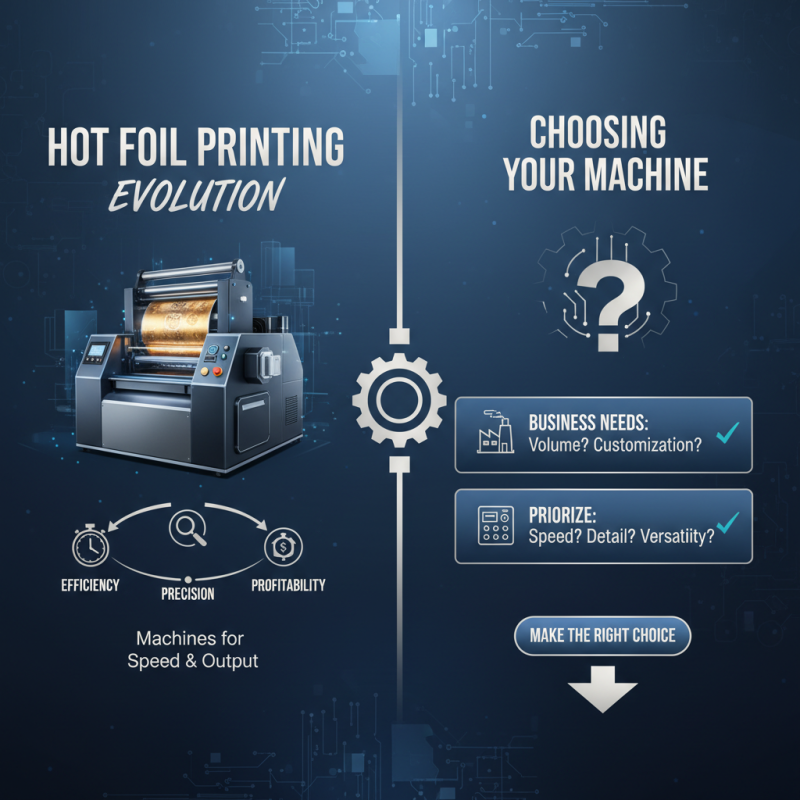
The world of hot foil printing is evolving rapidly. Choosing the right machine can be overwhelming. Each brand offers unique features. Some prioritize efficiency, while others focus on precision. It’s essential to determine what matters most for your business.
When selecting a hot foil machine, consider its usability. Machines with complicated settings can hinder productivity. Look for intuitive controls. Easy-to-read displays can save time and frustration. Also, think about supportive services like customer support and available resources. These can make a significant difference for beginners.
Tips: Test the machine before making a purchase. A hands-on experience reveals much. Also, gather feedback from current users. Their insights can highlight potential issues. Don’t rush the decision. Take time to weigh the pros and cons. Remember, the right machine should align with your specific needs, not just trends.